
10 Common Tennis Mistakes Beginners Make (And How to Fix Them)
All Tennis Articles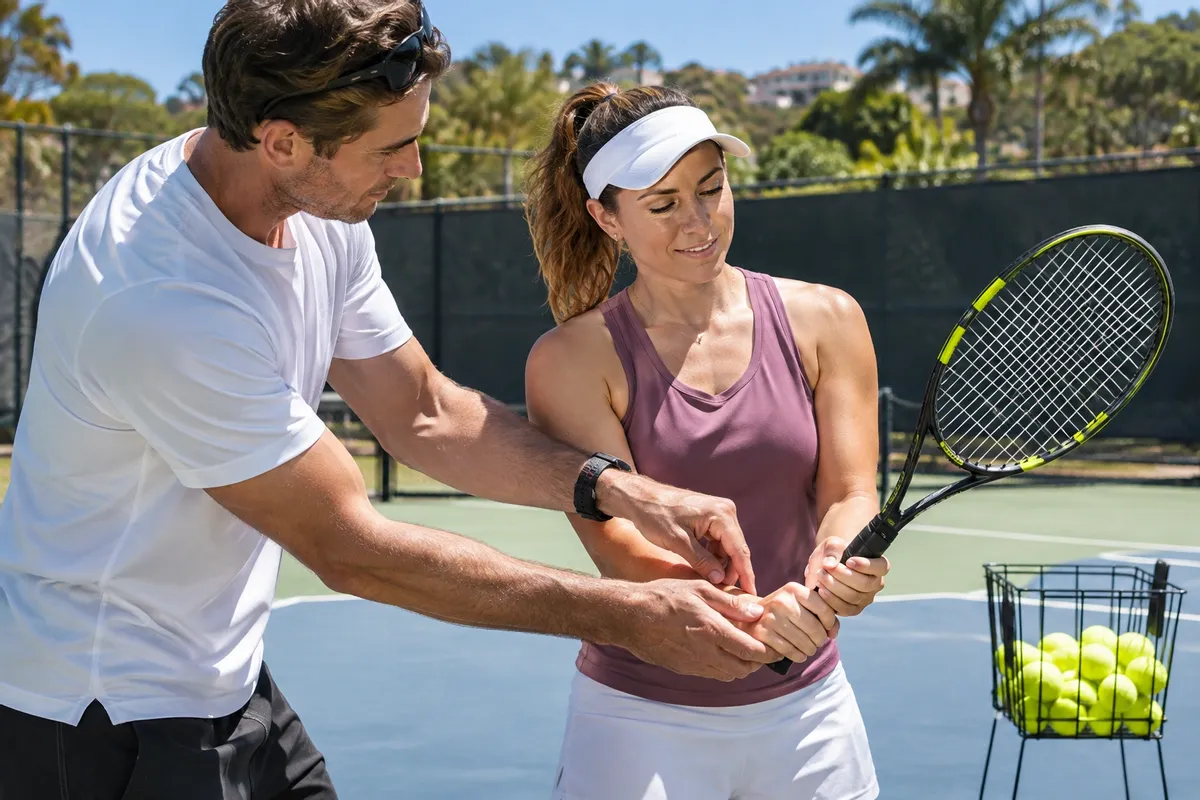
Learning tennis is exciting, but it can also be frustrating when your shots keep landing outside the court, your serves hit the net, or you struggle to maintain a rally. Fortunately, many of these challenges come from common beginner mistakes that can be corrected with proper instruction and consistent practice.
At On The Rise Tennis Academy, we help children and adults throughout San Diego County develop fundamental tennis skills while building confidence on the court. Whether you're picking up a racket for the first time or returning to the sport after several years, developing good habits early can make learning more enjoyable.
Let's explore ten common tennis mistakes beginners make and practical ways to overcome them.
1. Holding the Tennis Racket Incorrectly
One of the most common mistakes beginners make is using an inappropriate grip or holding the racket too tightly. Many new players assume that gripping the racket firmly gives them greater control. However, excessive tension can restrict movement and make strokes less comfortable.
Different tennis shots require different grips. Using the same grip for every shot can limit your ability to develop proper technique.
How to Fix It
Start by learning the basic tennis grips:
- Eastern forehand grip: A beginner-friendly option for developing forehand strokes.
- Continental grip: Commonly used for serves, volleys, and overhead shots.
- Two-handed backhand grip: Helps many beginners develop backhand stability and control.
Keep your grip relaxed without allowing the racket to move excessively in your hand.
A tennis coach can help you identify the appropriate grip for each stroke and correct uncomfortable hand positions before they become established habits.
2. Trying to Hit the Ball Too Hard
Many beginners associate good tennis with powerful shots. They attempt to hit every ball as hard as possible, often sacrificing accuracy, timing, and balance.
While powerful strokes can be useful as your game develops, consistency should be a greater priority during the early stages of learning.
A controlled shot that lands inside the court is generally more useful than a powerful shot that flies beyond the baseline.
How to Fix It
Focus on smooth, controlled swings rather than maximum speed. Start by rallying from inside the service boxes, then gradually move farther back.
Try placing cones or markers on the court and aiming for them with comfortable swings.
Set yourself a goal of completing ten consecutive shots with a practice partner. Once you can consistently achieve that goal, gradually increase your pace.
Developing accuracy first gives you a stronger foundation for adding speed later.
3. Using the Wrong Tennis Equipment
Beginners sometimes purchase rackets based on appearance, professional player endorsements, or price rather than suitability.
A racket that is too heavy, too long, or uncomfortable to grip can make learning unnecessarily difficult. This is particularly important for children who are still developing strength and coordination.
A 2014 study published in Research Quarterly for Exercise and Sport found that children achieved better forehand hitting performance when using smaller rackets combined with lower-compression tennis balls. The equipment also encouraged improvements in certain aspects of stroke technique.
How to Fix It
Choose equipment appropriate for your age, physical ability, and experience.
For younger players, consider:
- Age-appropriate junior tennis rackets.
- Red, orange, or green low-compression tennis balls.
- Comfortable tennis shoes with lateral support.
- Lightweight equipment that allows controlled movement.
Adult beginners should also prioritize comfort and maneuverability when choosing a racket.
Before purchasing expensive equipment, ask your tennis instructor for recommendations based on your individual needs.
4. Neglecting Proper Footwork
Tennis involves much more than swinging a racket. Your ability to move around the court and position yourself before hitting the ball significantly influences your performance.
Beginners often remain stationary until the ball approaches, forcing them to stretch, rush, or swing from uncomfortable positions.
Poor positioning can make even relatively easy shots difficult to return.
How to Fix It
Practice maintaining an active ready position between shots.
Keep your knees slightly bent, your feet comfortably apart, and your weight balanced. Hold your racket in front of your body so you can react in either direction.
Work on developing a small split step as your opponent strikes the ball. This movement helps prepare you to change direction.
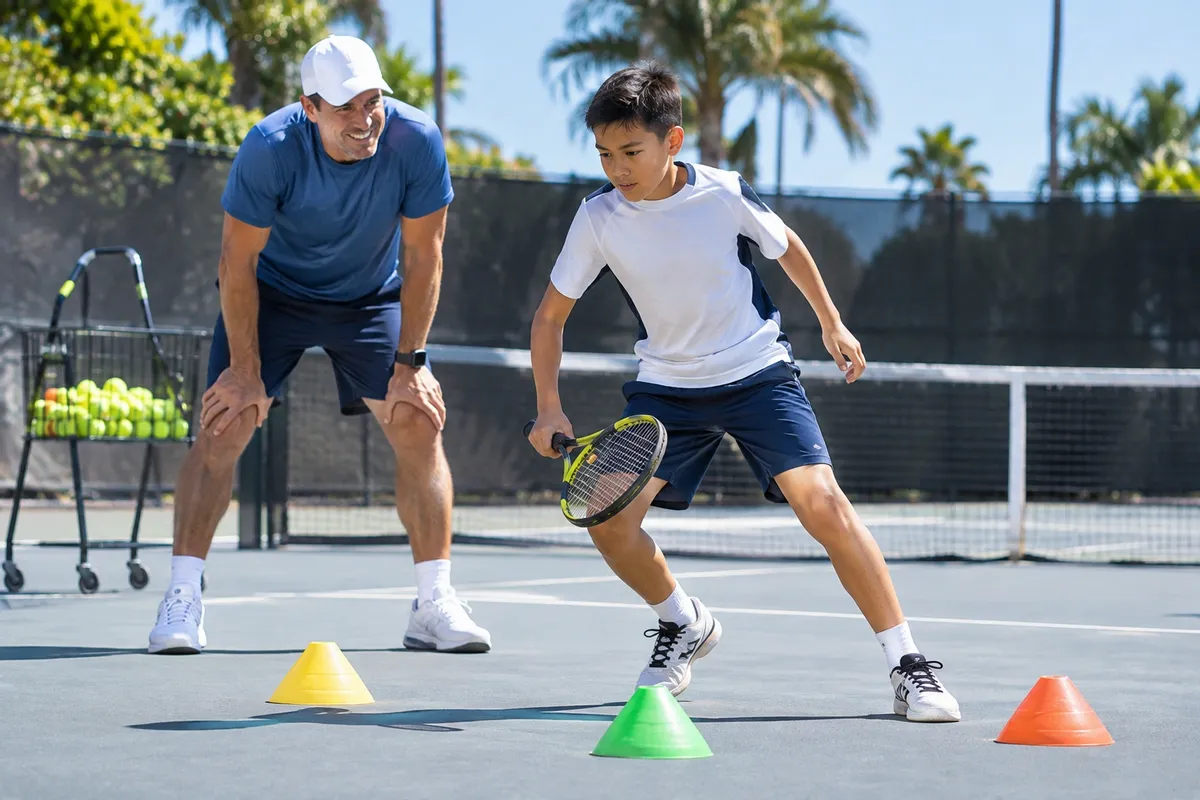
Simple exercises such as side shuffles, short sprints, and cone drills can improve your movement around the court.
Remember, reaching the ball in a comfortable position is often more important than swinging harder.
5. Focusing Too Much on Every Body Movement
Learning tennis involves understanding several movements, including grip changes, shoulder rotation, foot placement, and racket positioning.
However, trying to consciously control every movement at once can overwhelm beginners.
A 2021 systematic review and meta-analysis published in Psychological Bulletin found that focusing on the intended outcome of a movement generally supported better motor performance and learning than concentrating exclusively on individual body movements.
Although the research covered various physical skills, its findings offer useful guidance for tennis practice.
How to Fix It
Instead of thinking about every part of your swing, focus on simple, achievable outcomes.
For example, aim to send the ball toward a particular section of the court or comfortably above the net.
Work on one technical correction at a time with your instructor. Once that movement becomes more familiar, introduce another adjustment.
Keeping practice instructions manageable can help you develop more natural and confident strokes.
6. Developing Poor Serving Habits
The serve is one of the most challenging skills for many beginner tennis players. It requires coordination, timing, balance, and controlled racket movement.
Common serving mistakes include inconsistent ball tosses, rushing through the motion, and relying too heavily on arm strength.
A 2026 scientific review published in Sports Medicine – Open examined tennis serving mechanics and identified several factors influencing physical stress on the upper body and lower back, including movement coordination, fatigue, technique, and racket specifications.
The findings highlight the importance of developing comfortable, efficient serving mechanics.
How to Fix It
Break your serve into smaller, manageable steps.
Begin by practicing a consistent ball toss without attempting to hit it. Once you become comfortable, introduce a simplified serving motion.
Focus on balance and smooth coordination rather than speed.
Private tennis lessons in San Diego can be particularly helpful for beginners who need individualized feedback on their serving technique.
7. Standing in the Wrong Position After Each Shot
Many beginners hit the ball and stay in the same position while watching it travel across the net.
Although this is understandable, it leaves them less prepared for the next return.
Tennis requires continuous movement, positioning, and anticipation throughout a rally.
How to Fix It
Develop the habit of recovering toward an appropriate court position immediately after each shot.
For example, after hitting a wide forehand, move back to a position that lets you cover your opponent's likely returns.
Avoid automatically returning to the exact center after every shot. Your ideal recovery position depends on where you hit the ball and your opponent's available angles.
Practice this movement during controlled rallies until recovery becomes a natural part of your game.
8. Skipping Warm-Ups and Training Too Much
Excited beginners sometimes arrive at the court and immediately start hitting balls. Others increase their practice frequency too quickly because they want to improve faster.
Both habits can place unnecessary physical demands on the body.
A 2025 systematic review of 37 studies examining injuries among adolescent and adult high-performance tennis players identified sudden increases in training workload as an important injury risk factor.
Although recreational beginners face different training demands, gradually increasing activity remains a sensible approach.
How to Fix It
Spend five to ten minutes preparing your body before playing.
A simple warm-up might include:
- Light jogging or brisk walking.
- Arm circles and shoulder rotations.
- Controlled leg swings.
- Side shuffles and gentle lunges.
- Short-distance rallies at a comfortable pace.
Increase your training frequency gradually and allow sufficient recovery between sessions.
During warmer San Diego afternoons, remember to take water breaks and avoid continuing through unusual pain or excessive fatigue.
9. Practicing Without Clear Goals
Spending time on the tennis court is valuable, but repeatedly hitting balls without a specific purpose can reinforce existing mistakes.
Beginners sometimes practice only their favorite shots while avoiding techniques they find challenging.
Structured practice helps players develop a more balanced skill set and recognize their improvement.
How to Fix It
Choose one or two realistic objectives before each practice session.
For example, you might aim to:
- Complete ten consecutive forehand returns.
- Land seven out of ten serves.
- Improve backhand consistency.
- Recover into position after every shot.
Keep your goals achievable and adjust them as your skills develop.
Group tennis classes offer structured opportunities to practice different skills, while private instruction lets players focus on individual challenges.
Combining these approaches can provide additional variety and direction.
10. Becoming Discouraged by Slow Progress
One of the biggest mistakes beginners make is expecting immediate results.
Tennis requires patience because players must develop several skills simultaneously. Some techniques may feel comfortable quickly, while others require weeks or months of practice.
Comparing yourself with experienced players can create unnecessary frustration and reduce your enjoyment of the sport.
How to Fix It
Measure progress against your previous performance rather than someone else's ability.
Celebrate small achievements, such as completing a longer rally, landing more serves, or feeling increasingly comfortable moving around the court.
For parents, encourage children to enjoy learning rather than placing excessive emphasis on winning.
Seasonal tennis camps and group classes can also introduce variety into practice, helping young players stay engaged while developing their skills.
Remember that mistakes are a normal and necessary part of learning tennis.

Improve Your Tennis Skills at On The Rise Tennis Academy
Avoiding these common beginner tennis mistakes starts with developing good habits, receiving constructive feedback, and practicing consistently. You don't need to master every technique immediately. Instead, focus on gradual improvement and enjoy the learning process.
At On The Rise Tennis Academy, we offer kids' group classes, adult group classes, private tennis lessons, and seasonal summer camps for players throughout San Diego County, including Rancho Bernardo, 4S Ranch, Poway, Del Sur, Carmel Valley, Escondido, Mira Mesa, Scripps Ranch, and surrounding communities.
Whether you're introducing your child to tennis or looking for beginner tennis lessons in San Diego, our coaching team can help you build fundamentals and feel more comfortable on the court.
Ready to start playing with greater confidence? Visit On The Rise Tennis Academy today to explore our programs and register for tennis lessons that match your age, experience, and goals.
